CIMPA SCHOOL
DETERMINISTIC MATHEMATICAL MODELS FOR BIOLOGICAL PROCESSES
Urgench State University, Uzbekistan
17 May - 28 May, 2027

About Us
The school aims to introduce students and young researchers to several important research directions in mathematical biology, with a focus on deterministic mathematical models used to describe complex biological processes. These models play a central role in understanding phenomena such as population dynamics, epidemiology, tumor growth, and respiratory system functioning.
Part of the program will focus on the mathematical modeling of biological populations using structured population dynamics and transport equations. Participants will be introduced to classical frameworks such as the McKendrick–Von Foerster models and renewal equations, which provide powerful tools for describing the evolution of populations structured by age, size, or other physiological characteristics. These approaches allow mathematicians to analyze key qualitative properties of biological systems, including stability, long-term behavior, and pattern formation.
Another component of the school will address epidemiological models based on the classical SIR (Susceptible–Infected–Removed) framework and its extensions. Participants will explore how these models describe the spread of diseases and how mathematical tools can be used to design optimal control strategies in applications such as plant epidemiology and crop protection.
The program will also present mathematical models used in oncology, ranging from simple systems of ordinary differential equations to more advanced approaches involving structured populations and mixture theory. These models help describe interactions between tumor cells and their microenvironment and analyze the effects of medical treatments.
In addition, the school will introduce aspects of fluid dynamics relevant to biological applications, including the analysis of the incompressible Navier–Stokes equations. Applications to biological flows, such as ventilation and gas diffusion in the lungs, will also be discussed.
Throughout the program, emphasis will be placed on the connection between theoretical analysis and practical applications. Participants will gain familiarity with modern mathematical tools used in the study of biological systems, including optimal control methods, asymptotic analysis, and numerical approaches. The school is designed for Master’s students, PhD students, and young researchers with a background in mathematics, and aims to provide them with both the theoretical foundations and the motivation to pursue research in this interdisciplinary field.
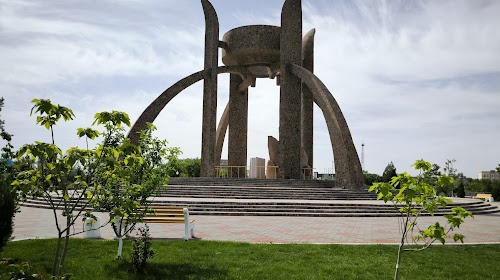
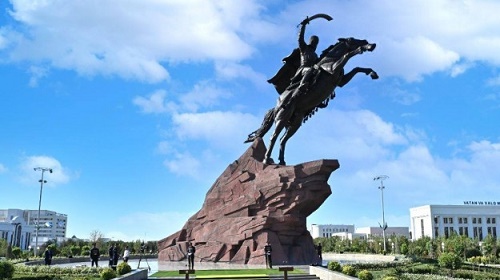
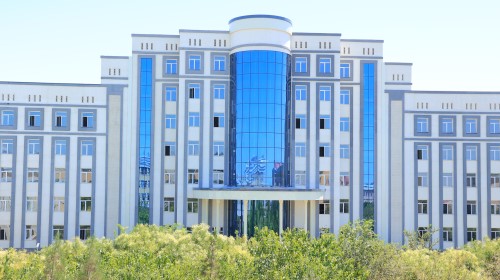
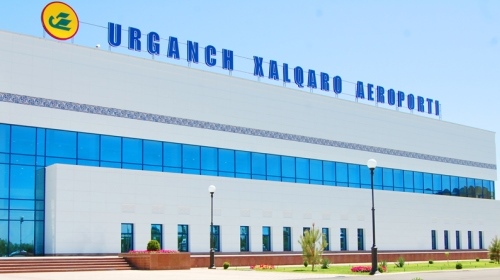
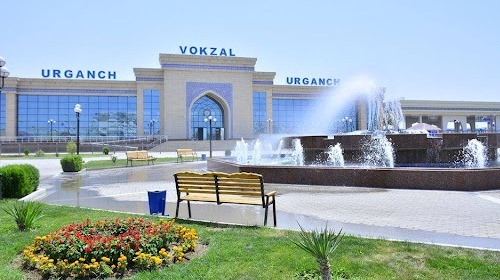
The School will be held in Urgench State University, Uzbekistan.
Urgench State University is one of the oldest Universites of the Republic of Uzbekistan.
The university is located in Khorezm, Khorezm is one of the historical and cultural centers of Uzbekistan, drawing tourists to the Silk Road city of Khiva, recognized as one of the country's four UNESCO World Heritage sites. The city showcases remarkable architecture and historical monuments that date back over 2,500 years. In addition to its rich cultural heritage, Khorezm boasts a significant scientific legacy, particularly in the history of science, offering a unique research environment for students. Notable scientists from the 8th to 11th centuries, including Al-Khorezmi and Al-Biruni, were born in this region and made lasting contributions to our scientific knowledge. For example, the word "algebra" originates from the title of Al-Khorezmi's book, and "algorithm" is derived from his name. By visiting the historical sites in Khorezm where these scientists conducted their work, students will gain a deeper understanding of the scientific advancements from the 8th to 15th centuries and appreciate the profound contributions of Al-Khorezmi and Al-Biruni to mathematics.



Committee
Florence Hubert
External Co-OrganizerAix-Marseille University, France
Umida Baltaeva
Local Co-OrganizerKhorezm Ma'mun Academy & Urgench State University, Uzbekistan
Scientific Committee
- Emeric Bouin – University Paris Dauphine, France
- Thierry Goudon – INRIA Nice-Sophia Antipolis, France
- Céline Grandmont – INRIA Paris, France
- Florence Hubert – Aix-Marseille University, France
- Suzanne Touzeau – INRIA Sophia-Antipolis, France
Organizing Committee
- Shavkat Ayupov – Uzbekistan Academy of Sciences, Uzbekistan
- Emeric Bouin – University Paris Dauphine, France
- Florence Hubert – Aix-Marseille University, France
- Jaishri Sanwal Bhatt – Jawaharlal Nehru Centre for Advanced Scientific Research, India
- Anar Assanova – Institute of Mathematics and Mathematical Modeling, Kazakhstan
- Umida Baltaeva – Khorezm Ma'mun Academy & Urgench State University, Uzbekistan
Local Organizing Committee
- Gayrat Urazboev – Urgench State University, Uzbekistan
- Ikram Abdullaev – Khorezm Mamun Academy, Uzbekistan
- Jumanazar Khujamov – Urgench State University, Uzbekistan
- Bazar Babajanov – Urgench State University, Uzbekistan
- Khasanov Muzaffar – Urgench State University, Uzbekistan
- Iroda Baltaeva – Urgench State University, Uzbekistan
- Anvar Reyimberganov – Urgench State University, Uzbekistan
Lecturers
Florence Hubert
Aix-Marseille UniversityFrance

Emeric Bouin
Paris Dauphine UniversityFrance
Suzanne Touzeau
INRIAFrance
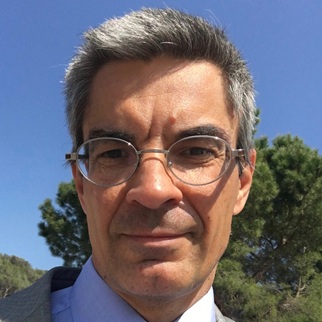
Thierry Goudon
INRIAFrance
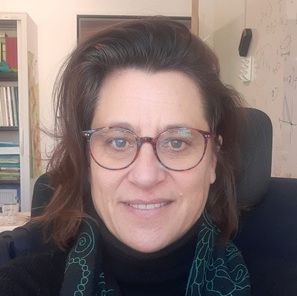
Céline Grandmont
INRIAFrance

Pedro J. Torres
University of GranadaSpain
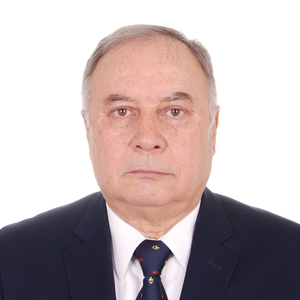
Ashurov Ravshan
Uzbekistan Academy of SciencesUzbekistan
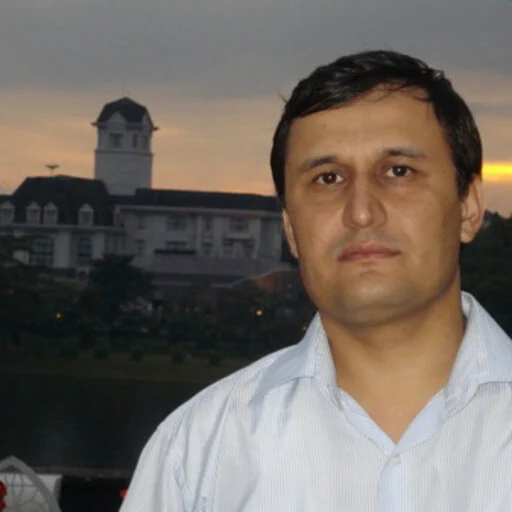
Uygun Jamilov
Institute of Mathematics, Uzbekistan Academy of SciencesUzbekistan
Umida Baltaeva
Khorezm Mamun Academy & Urgench State UniversityUzbekistan
Courses
01 Course 1 - Models in oncology by Florence Hubert
This course aims to present several deterministic models used in oncology. We will begin with very simple systems of ordinary differential equations (ODEs) that capture the essential mechanisms of cancer evolution, and discuss their limitations. These models will then be progressively refined and extended to structured population approaches, in order to better account for biological complexity. Such extensions are particularly necessary to incorporate the effects of medical treatments. Furthermore, we will emphasize that the tumor microenvironment plays a crucial role in disease progression, and introduce a family of models based on mixture theory, specifically designed to provide a detailed description of the interactions between the tumor and its microenvironment.
02 Course 2 - Structured population dynamics by Emeric Bouin
Many phenomena in mathematical biology can be described by using the mathematical properties of the transport equation and more generally a kinetic description of a large population of individuals. One main example is the pattern formation that occurs naturally while observing a flock of birds, a school of fish or a swarm of bees. A possible mathematical description of this behaviour uses the kinetic gas description of statistical mechanics to describe the interaction of a large number of individuals. With this perspective, swarming would be a consequence of an equilibrium between large-range attraction between moving individuals of the same species and a long-range repulsion intended to avoid collisions. The mathematical framework of these models involves the use of the transport equation and the associated collision and alignment alignment models, based on the Boltzmann equation. The goal of this course is to give an introduction to these tools, in particular, renewal equations and their wellposedness, transport equations (classical, weak and renormalized solutions) and time asymptotics.
03 Course 3 - Epidemiology and population dynamics, by Suzanne Touzeau.
This course is designed in two parts. The first part is dedicated to an introduction of dynamical models used in epidemiology, based on the SIR Susceptible-Infected-Removed model. Building on the basic ODE model, various disease-related specificities will be included, such as vertical transmission or vector-borne diseases. The course will then address a classical metric in mathematical epidemiology, the basic reproduction number R0, which can be defined as the number of secondary cases generated by an average infectious individual in a susceptible population. The next-generation method will be used for its computation. Finally, there will be a focus on plant epidemiology, which is fairly specific compared to human and animal epidemiology. (Introductory course - 3 hours: half lecture, half exercise session) The second part of the course is dedicated to the design of optimal control strategies in plant epidemiological models. An introduction to optimal control theory will be given. Then, based on several examples in crop protection, the choice of the optimisation criterion will be examined, which will in some cases lead to “standard” optimisation problems rather than optimal control problems. The BOCOP software will be used to solve the optimal control problems. (Advanced course - 3 hours: half lecture, half practical session).
04 Course 4 - Introduction to fluid dynamics by Thierry Goudon and Céline Grandmont
This course aims to present the incompressible Navier-Stokes equations that describe the behavior of incompressible viscous flows. The aim of the course is to give an introduction and provide standard mathematical results such as the existence of solutions. Two applications will be also presented: one to oncology and the other one to the ventilation process.
05 Course 5 - Models for the respiratory track by Céline Grandmont
The aim of the lecture is to present a hierarchy of models of ventilation and gas diffusion in the lung. First a coupled system of ODEs describing the evolution of global quantities shall be presented, then systems of PDEs describing the transport and diffusion of air as a gas mixture along the bronchial tree. These later models are based on 1D advection-diffusion-reaction equations and they enable the recovery of standard breathing quantities and scenarios. These models can be further used to control breathing.
Advanced talks
01 Advanced talk 1. Ashurov Ravshan – Uzbekistan Academy of Sciences, Uzbekistan
Title. New methods for solving inverse problems of determining the order of fractional derivatives of partial differential equations
02 Advanced talk 2. Pedro J. Torres – University of Granada, Spain
Title. Recent developments and ideas on metapopulations, metacommunities and opinion models
03 Advanced talk 3. Uygun Jamilov – Institute of Mathematics, Uzbekistan Academy of Sciences, Uzbekistan
Title. Discrete-time dynamical systems of quadratic stochastic operators
04 Advanced talk 4. Umida Baltaeva
Title. Growth-fragmentation equation to model the metastatic emission by clusters

Schedule
Two-Week Training Program Schedule
Week 1
| Time | Monday | Tuesday | Wednesday | Thursday | Friday |
|---|---|---|---|---|---|
| 8:30–10:00 | Opening (9h) | Course 2 (2/3) | Course 1 (3/3) | Student talks | |
| 10:00–10:30 | Coffee Break | Coffee Break | Coffee Break | Coffee Break | Coffee Break |
| 10:30–12:00 | Course 1 (1/3) | Training session -Course 1 (1/3) | Course 3 (2/3) | Course 2 (3/3) | Training session -Course 1 (3/3) |
| 12:00–13:30 | Lunch Break | Lunch Break | Lunch Break | Lunch Break | Lunch Break |
| 14:00–15:30 | Course 2 (1/3) | Training session -Course 2 (1/3) | Training session -Course 1 (2/3) | Course 3 (3/3) | Training session -Course 2 (3/3) |
| 15:30–16:00 | Coffee Break | Coffee Break | Coffee Break | Coffee Break | Coffee Break |
| 16:00–17:30 | Course 3 (1/3) | Training session -Course 3 (1/3) | Training session -Course 2 (2/3) | Training session -Course 3 (2/3) | Training session -Course 3 (3/3) |
Week 2
| Time | Monday | Tuesday | Wednesday | Thursday | Friday |
|---|---|---|---|---|---|
| 8:30–9:00 | Course 4 (1/3) | Course 4 (2/3) | Course 4 (3/3) | Advanced talks | Advanced talks |
| 9:00–10:00 | |||||
| 10:00–10:30 | Coffee Break | Coffee Break | Coffee Break | Coffee Break | Coffee Break |
| 10:30–12:00 | Course 5 (1/3) | Course 5 (2/3) | Course 5 (3/3) | Advanced talks | Advanced talks |
| 12:00–13:30 | Lunch Break | Lunch Break | Lunch Break | Lunch Break | Lunch Break |
| 14:00–15:30 | Student talks | Training session Course 4 (1/3) | Training session Course 4 (2/3) | Training session Course 4 (3/3) | Closing |
| 15:30–16:00 | Coffee Break | Coffee Break | Coffee Break | Coffee Break | |
| 16:00–17:30 | Student talks | Training session Course 5 (1/3) | Training session Course 5 (2/3) | Training session Course 5 (3/3) |
registration
The application deadline for your school is January 17th, 2027. All applications should go through the CIMPA website: https://applications.cimpa.info
The procedure is described here: https://www.cimpa.info/en/node/63
Organizing Institutions


Photogallery
- All
- July 3-10, 2025
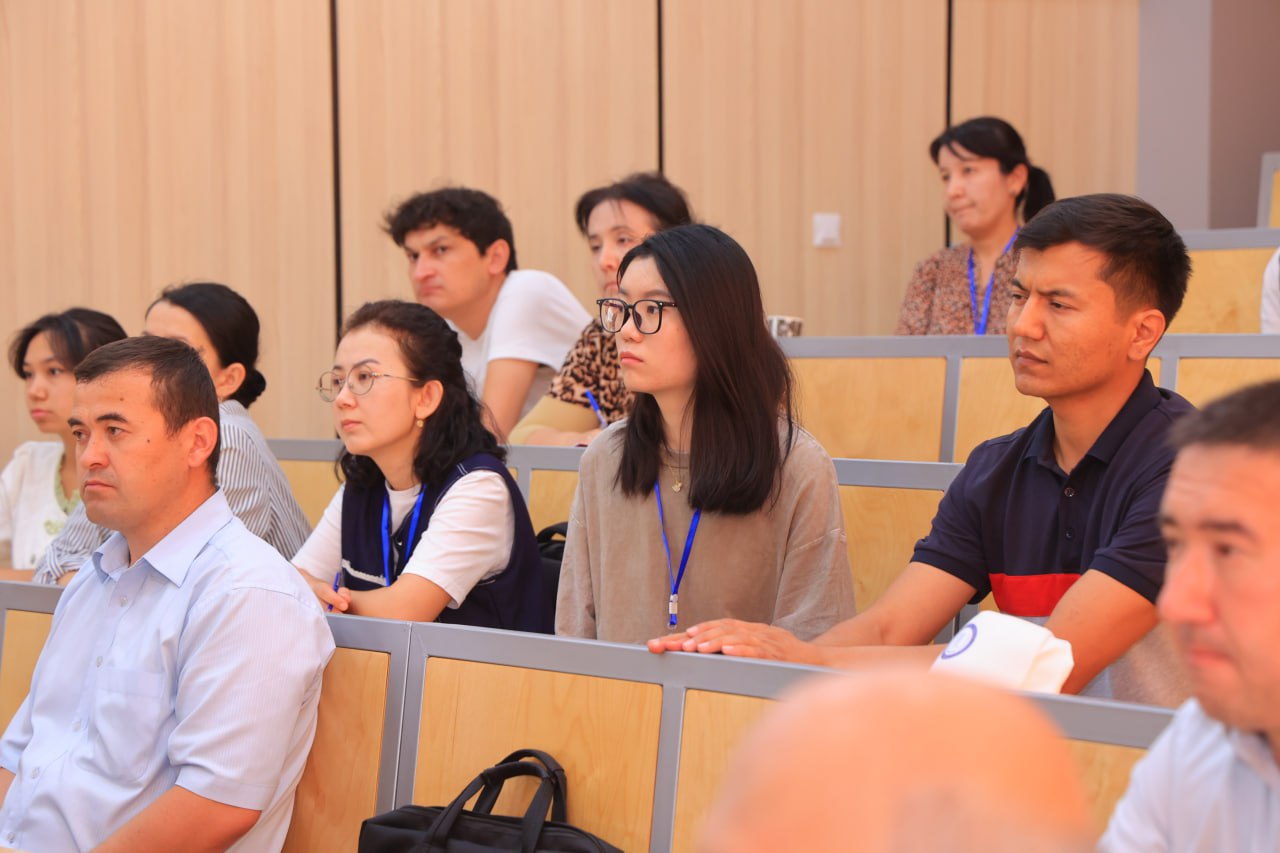
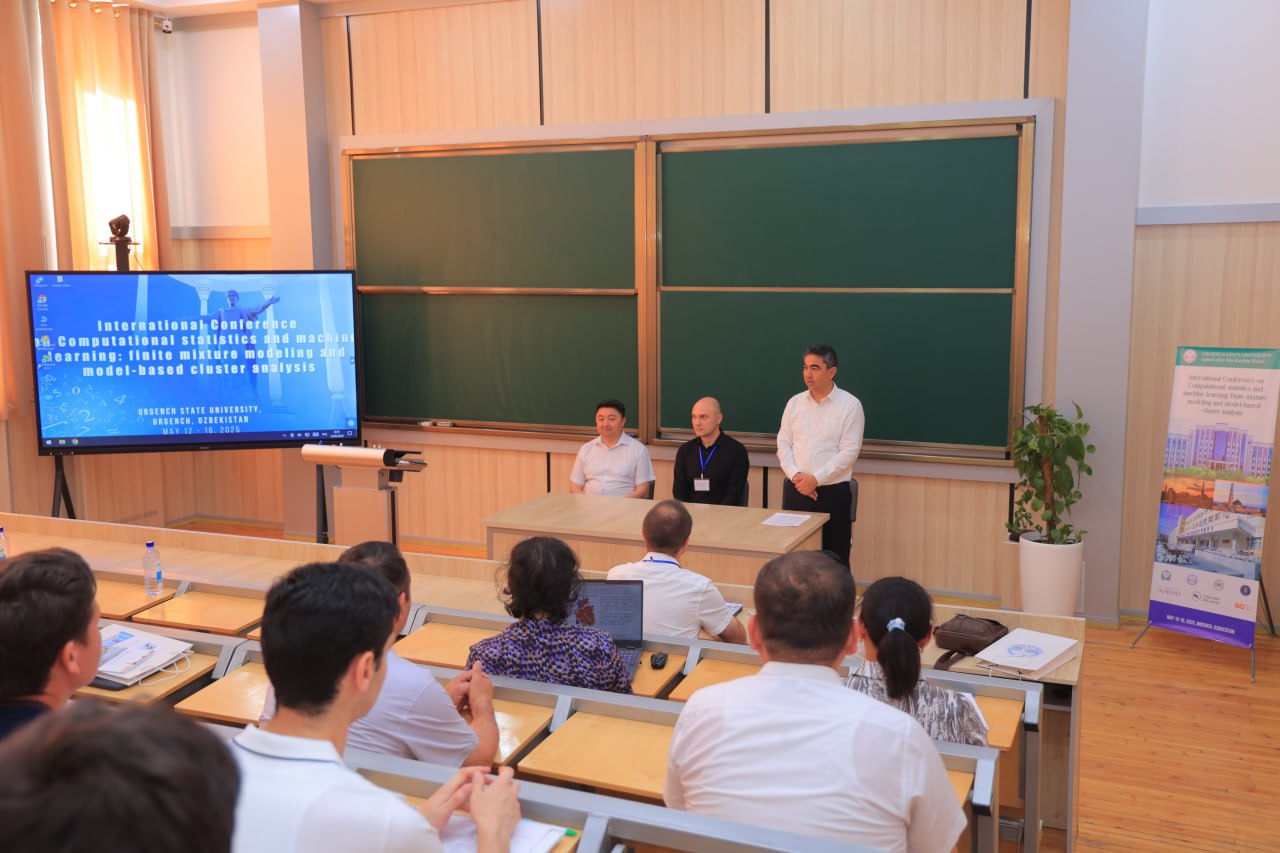
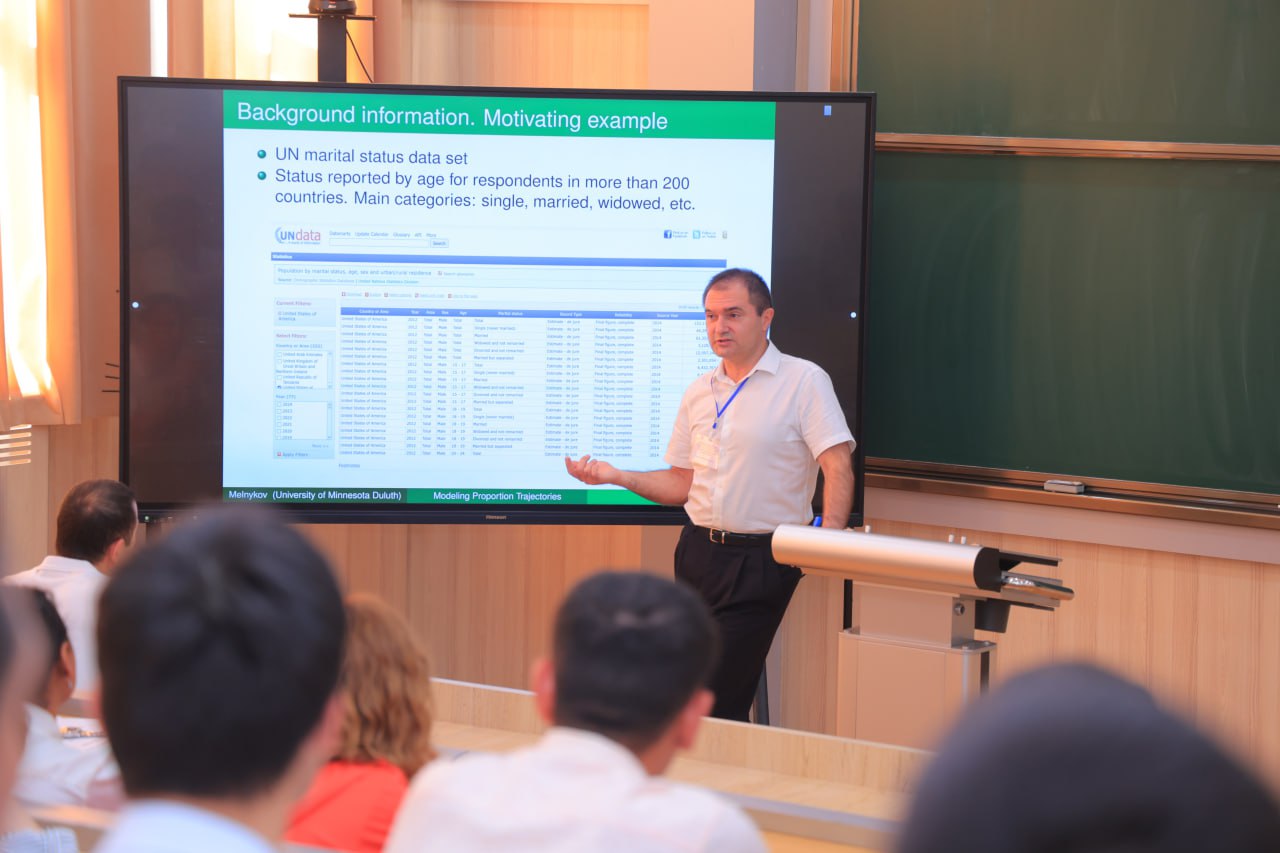
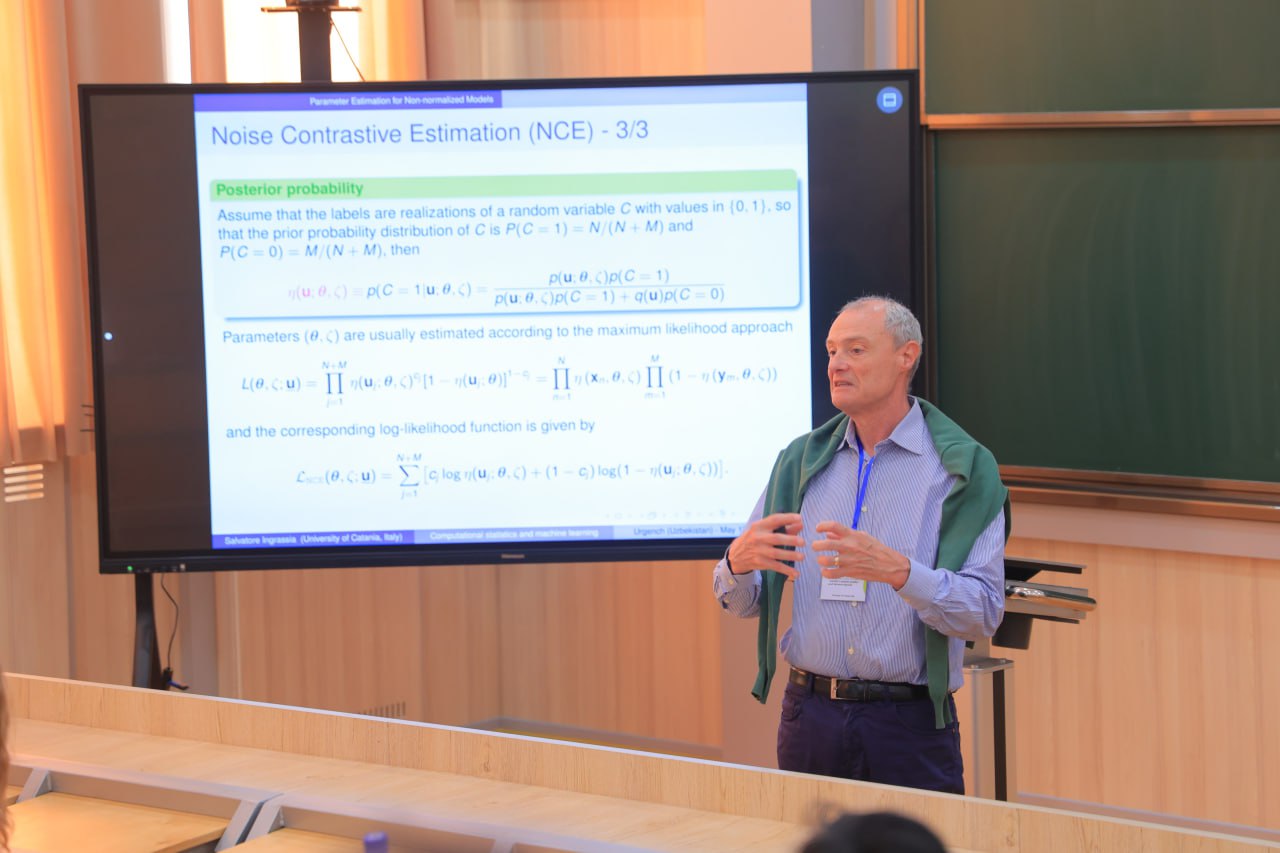
- May 12-16th, 2025
- January 5-9, 2024
- June 25 — July 5, 2024
- June 6 - 10, 2022
- October 25 — November 6, 2021


Contact
Address
14 Khamid Alimdjan Street, Urgench, Uzbekistan